
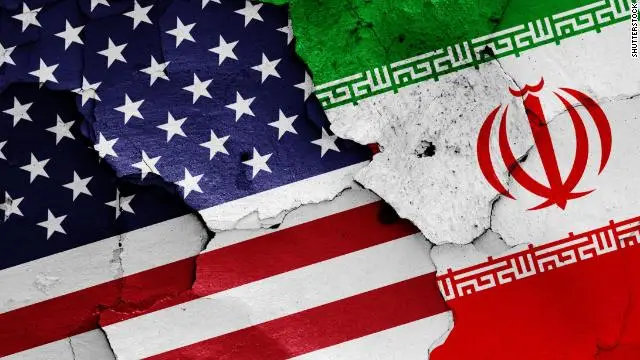
The geopolitical landscape was set on fire this morning following the arrival of the USS Abraham Lincoln carrier strike group in the Middle East. President Donald Trump has described the deployment as a “massive fleet” positioned “just in case” the Iranian regime continues its deadly crackdown on domestic protesters or restarts its nuclear enrichment programs.
With the death toll from Iranian protests now estimated at over 6,000, the United States has transitioned from diplomatic warnings to active military posturing. The announcement of a multi-day Air Force exercise involving F-15E Strike Eagles signals that Washington is no longer merely watching—it is preparing for potential precision strikes.
1. The “Armada” Arrival: A Shift in Power
The arrival of the USS Abraham Lincoln, accompanied by several guided-missile destroyers, provides the U.S. with immediate strike capabilities without needing the consent of regional neighbors like Saudi Arabia or the UAE, both of which have declared they will not allow their territory to be used for offensive actions against Iran.
- Carrier Capabilities: The fleet brings integrated airpower, missile defense, and intelligence assets within striking range of Tehran and key IRGC facilities.
- “Peanuts” Warning: President Trump signaled that any military action taken today would make the June 2025 strikes on Iranian nuclear sites “look like peanuts.”
2. Iran’s “All-Out War” Retaliation
Tehran has responded with a direct ultimatum: any American attack will be treated as an act of full-scale war.
- The “Whirlwind” Warning: A massive mural unveiled in Tehran’s Enqelab Square depicts a damaged U.S. carrier with the caption, “If you sow the wind, you’ll reap the whirlwind.”
- Proxy Mobilization: In Iraq, the Iran-aligned group Kataib Hezbollah has reportedly begun signing up volunteers for suicide operations, signaling that a strike on Iran could trigger a “comprehensive war” involving U.S. bases in Iraq and Syria.
3. The 2026 Economic Fallout: Markets in Turmoil
The threat of war has sent shockwaves through the financial sectors, particularly in commodities and safe-haven assets.
- Oil (WTI/Brent): Prices are currently seeing a “risk premium” spike as traders fear a closure of the Strait of Hormuz.
- Safe Havens: XAUUSD (Gold) is testing new highs as the VIX (Volatility Index) surges past the 20.00 threshold, reflecting peak market anxiety.
- Iran’s Rial Collapse: Domestically, the Iranian Rial has hit a record low of 1,432,000 to 1 USD, fueled by a nationwide internet blackout and bank failures.
4. The Path Forward: Diplomacy or Destruction?
Despite the “armada” in the Gulf, the U.S. administration has left a narrow door open for negotiations. President Trump noted today that Iran “wants to make a deal” and has called on numerous occasions to talk. However, with the Iranian Revolutionary Guard (IRGC) “finger on the trigger,” the margin for error is razor-thin.