
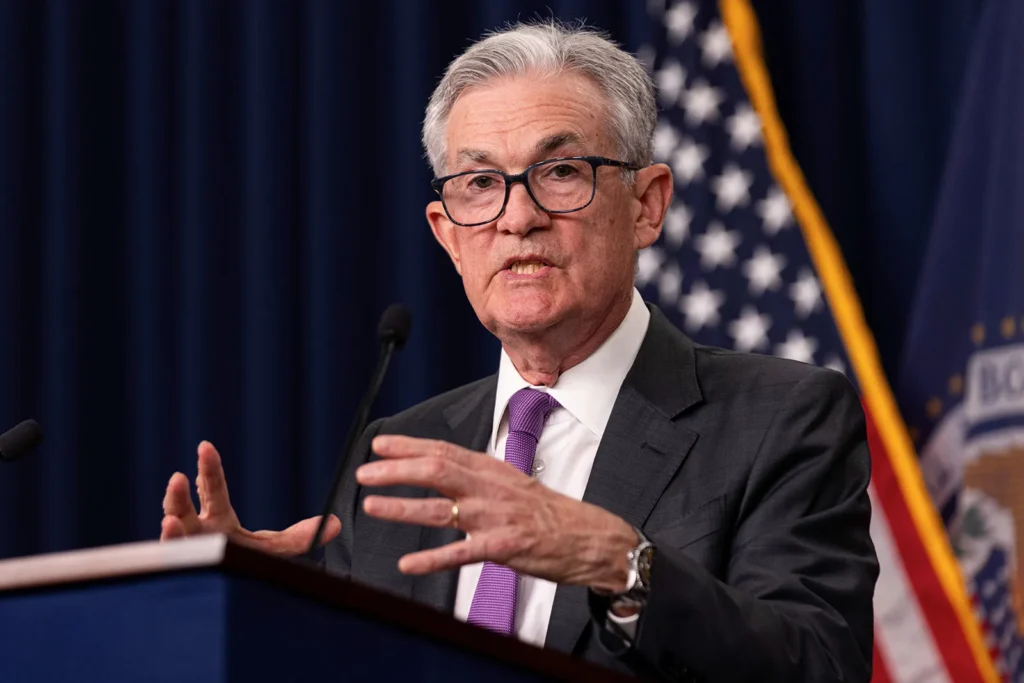
The initial shock of the New York Times report regarding the criminal inquiry into Fed Chair Jerome Powell is beginning to settle, but for Wall Street, the real work is just beginning. As we peel back the layers of this investigation, it becomes clear that this is less about a $2.5 billion building renovation and more about a fundamental fight for the steering wheel of the American economy.
1. The “Pretext” Theory: Why Now?
Analysts at Evercore ISI and Goldman Sachs are increasingly aligned with Powell’s own defense: that the investigation is a tactical move. Throughout 2025, President Trump publicly demanded the Fed lower interest rates to near-zero to fuel his “pro-growth” agenda. Powell, citing a “sticky” 3% inflation rate, only delivered three 25-basis-point cuts in 2025.
By opening a criminal probe now, the administration effectively creates a “lame duck” period for Powell. With his term ending in May 2026, any significant policy move he makes between now and then will be scrutinized through the lens of this investigation.
2. The March Rate Decision: From “Data-Driven” to “Drama-Driven”
Before the news broke, futures markets were split on whether the Fed would cut rates at the March 18, 2026 meeting. Now, the math has changed:
- The “Hike” Risk: If Powell “stands firm” to prove his independence, he may keep rates higher for longer, even if the economy softens.
- The “Flight to Quality”: We are seeing a massive divergence in assets. While the S&P 500 futures dropped 0.4%, Gold hit an all-time high of $4,579.87 this morning.
3. The “Shadow Fed” and the Succession Race
While the DOJ focuses on subpoenas, the Treasury Department—led by Scott Bessent—is reportedly already interviewing replacements.
- The Contenders: Kevin Hassett and Kevin Warsh are the front-runners.
- The Strategy: By signaling a successor early, the administration hopes to “calm” the markets by showing that a pro-growth, rate-cutting Fed is just months away, even if the transition is messy.
4. Institutional Reaction: JPMorgan vs. The DOJ
JPMorgan Chase, which kicks off earnings season this week, is in a delicate position. CEO Jamie Dimon has long defended Fed independence. If the bank’s earnings notes this week contain a formal defense of Powell, it could signal a brewing “civil war” between the titans of Wall Street and the current administration.