
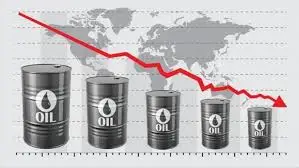

After a volatile start to the week, the oil market is seeing a notable cooldown today, January 21, 2026. Despite a brief rally earlier in the week, both major benchmarks are trading in the red as traders pivot their focus from supply disruptions to a looming global surplus.
The Current Snapshot (January 21, 2026)
As of this morning, prices have retreated from their Tuesday peaks:
- Brent Crude: Down $0.79 (1.2%) to $64.13 per barrel.
- WTI (West Texas Intermediate): Down $0.64 (1.1%) to $59.72 per barrel, slipping back below the critical $60 support level.
Why Are Prices Falling Today?
Several conflicting factors are pulling the market in different directions, but the “bearish” sentiment is currently winning the tug-of-war.
1. Anticipated U.S. Inventory Build Traders are bracing for the latest data from the Energy Information Administration (EIA). Early estimates suggest a significant build-up in U.S. crude and gasoline inventories, signaling that supply is outpacing demand in the world’s largest economy.
2. The Kazakhstan “Correction” Earlier this week, oil spiked following a power-related production halt at the Tengiz and Korolev fields in Kazakhstan. However, today’s price action suggests that the market has already “priced in” this disruption, viewing it as a temporary technical glitch rather than a long-term supply threat.
3. The “Greenland” Geopolitical Risk The energy sector remains jittery over U.S. President Donald Trump’s ongoing trade threats related to the acquisition of Greenland. Potential tariffs on European states have sparked fears of a broader global economic slowdown, which would inevitably dampen fuel demand.
The 2026 “Super-Glut” Warning
Today’s dip aligns with a broader trend many analysts have predicted for 2026. The International Energy Agency (IEA) recently warned of a potential “super-glut”—a surplus of 3 to 4 million barrels per day—if OPEC+ and non-OPEC producers like Guyana and Brazil continue their current output trajectories.
What to Watch Next
For the remainder of the week, all eyes will be on:
- Official EIA Inventory Data: Will the build-up be as large as expected?
- Davos Commentary: Any shifts in trade rhetoric from the World Economic Forum could trigger immediate volatility.
- China’s Refinery Demand: While recent GDP data was strong, the market is looking for concrete evidence that China is increasing its actual crude consumption rather than just filling strategic reserves.

Stay connected