
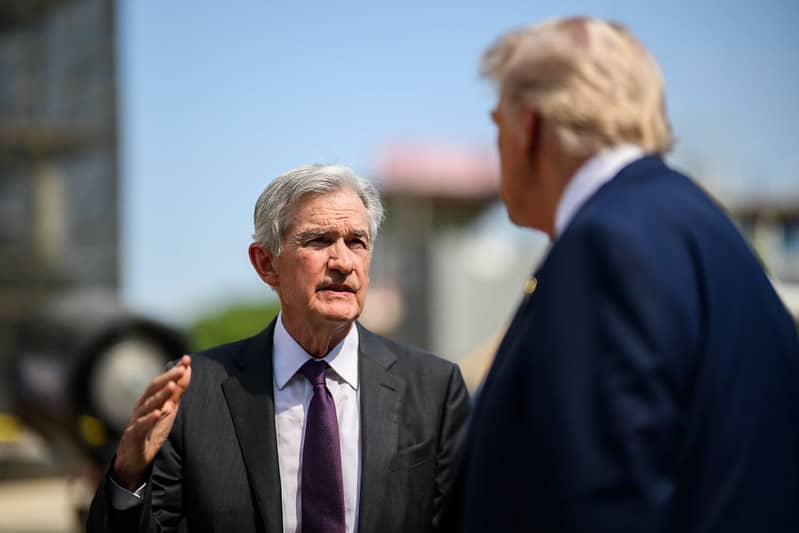
The long-simmering feud between the White House and the Federal Reserve has finally reached a breaking point.1 On Sunday, Federal Reserve Chair Jerome Powell dropped a bombshell: the Department of Justice (DOJ) has launched a criminal investigation into his June testimony regarding a $2.5 billion renovation of the Fed’s headquarters.2
Powell didn’t mince words, calling the probe a “pretext” for political intimidation.3 But while the headlines are focused on the legal drama, investors and everyday Americans are left asking one question: What does this mean for my money?
The Allegations: Real Crime or Political Pressure?
The DOJ, led by U.S. Attorney Jeanine Pirro, is investigating whether Powell misled Congress about the costs of the Fed’s D.C. headquarters upgrades.4 President Trump has repeatedly slammed the project as “lavish,” but Powell maintains the costs were essential for safety and modernization.5
In a rare video address, Powell signaled he won’t be bullied:6
“The threat of criminal charges is a consequence of the Federal Reserve setting interest rates based on our best assessment of what will serve the public, rather than following the preferences of the President.”78
Market Watch: The 48-Hour “Shock and Shrug”
Historically, an attack on the Fed’s independence would send Wall Street into a tailspin.9 However, the last 48 hours (January 12–13, 2026) have shown a surprising amount of resilience.10 Here is how the major indices and yields have reacted:
S&P 500: The Defiant Record High
Despite opening lower on Monday, the S&P 500 shook off the news to close at a new record high.11 Many institutional investors view the DOJ probe as “political theater” rather than a legitimate threat to the economy.
Treasury Yields: Pricing in the Risk
The bond market has been more cautious. The 10-year Treasury yield spiked to 4.21% on Monday as traders began pricing in a “risk premium.”12 Investors are worried that if the Fed loses its independence, inflation might stay higher for longer.13
Gold: The Ultimate Safe Haven
Gold has been the biggest winner, surging to an all-time high of $4,640 per ounce.14 When trust in government institutions wavers, investors flock to “hard” assets.
| Asset Class | 48-Hour Trend | Current Status |
| S&P 500 | 📈 Up | Trading at Record Highs |
| 10-Year Yield | 📈 Up | Holding near 4.18% |
| Gold | 🚀 Surge | Above $4,600/oz |
| US Dollar | 📉 Down | “Sell America” trade returning |
Why This Matters to You
You might think a legal battle over building renovations is inside-baseball for D.C., but it directly affects your cost of living. Here’s why:
- Inflation Control: An independent Fed can raise rates to fight inflation even if it’s unpopular. A “political” Fed might keep rates low to boost the stock market, leading to higher prices at the grocery store.
- Mortgage Rates: Bond market volatility directly impacts mortgage rates. If the “risk premium” on Treasury yields stays high, don’t expect home loans to get cheaper anytime soon.
- The “Sell America” Risk: Global investors buy U.S. assets because of our stable institutions. If that trust breaks, the Dollar weakens, making imported goods more expensive for everyone.
The Road Ahead: May 2026 Standoff
Jerome Powell’s term as Chair ends in May 2026.15 While the President is expected to name a successor soon (with Kevin Hassett as a frontrunner), Powell can technically stay on the Board of Governors until 2028.
With Republican Senators like Thom Tillis and Lisa Murkowski already expressing concern over the DOJ’s tactics, a confirmation battle for a new Chair could lead to even more market volatility in the months to come.16