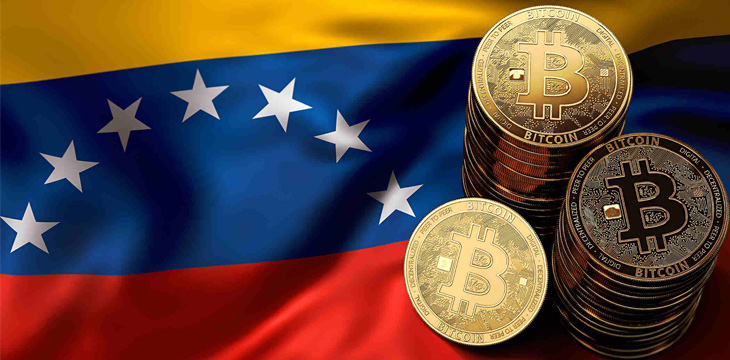

In early January 2026, the world’s attention is fixed on Caracas following the dramatic capture of Nicolás Maduro by U.S. forces. While the geopolitical headlines focus on the fate of the world’s largest oil reserves—valued at over $17 trillion—a more elusive treasure is sending shockwaves through the financial markets: The Bitcoin Shadow Reserve.
Intelligence reports now suggest that Venezuela may be holding between 600,000 and 660,000 BTC, currently valued at over $60 billion. If confirmed, this would make the Venezuelan state one of the largest active Bitcoin holders on Earth, rivaling institutional giants like BlackRock and MicroStrategy.
Beyond the Oil: The Digital Gold Standard
For decades, Venezuela’s power was measured in barrels of heavy crude. However, under the weight of crippling sanctions and hyperinflation, the regime pivotally shifted its strategy. While the state-backed “Petro” was a public failure, the government was secretly building a massive “Shadow Reserve” of Bitcoin to bypass the U.S. dollar.
How the Reserve Was Built
This wasn’t a single purchase, but a multi-year strategy to survival:
- The Gold-for-Bitcoin Pivot (2018–2020): Reports indicate that gold from the Orinoco Mining Arc was laundered through shell companies and exchanged for Bitcoin when prices were near $5,000. This move alone likely accounts for the bulk of the current $60B valuation.
- Oil-for-USDT Settlements: As the banking system closed off, the state oil company (PDVSA) began demanding payments in Tether (USDT). These stablecoins were then systematically “washed” into Bitcoin to prevent the U.S. Treasury from freezing the addresses.
- State-Run Mining: Leveraging subsidized hydroelectric power, the government operated massive mining farms before a sudden crackdown in 2024, which many now believe was a move to centralize all “private” hash power under state control.
Why This Matters for the Global Market
While $17 trillion in oil is a staggering figure, it is “heavy” and difficult to move or liquidate under sanctions. Bitcoin, by contrast, is highly liquid and borderless.
The “Supply Lock” Theory
The discovery of this hoard has created a unique “Supply Shock” in the crypto markets. Traders are realizing that if the U.S. government successfully seizes these assets, they won’t simply be dumped onto the market.
- Comparison to Germany: When the German state of Saxony sold 50,000 BTC in 2024, it caused a 15% price correction.
- The Venezuelan Scale: Venezuela’s stash is 12 times larger.
- The Lock-up: Because these are now “frozen sovereign assets,” they will likely enter a years-long legal limbo or be moved to a U.S. Strategic Reserve.
Effectively, 3% of the total Bitcoin supply has just been removed from the circulating market.
The Big Question: Who Has the Keys?
Capturing a leader is easy; capturing a seed phrase is nearly impossible. Unlike oil wells, which can be seized by physical force, Bitcoin requires the private keys.
Speculation is mounting that the keys are held by a small circle of “Shadow Bankers” or allies like Alex Saab. Without their cooperation, the $60 billion remains a “digital ghost”—an asset that exists on the blockchain but can never be moved, further tightening the global supply of Bitcoin.
“The true sovereignty of a 21st-century nation may no longer be found in its soil, but in its seed phrases.”
Conclusion: A New Geopolitical Era
Venezuela has inadvertently created the blueprint for how “pariah states” can build sovereign wealth outside the SWIFT system. Whether this Bitcoin is used to rebuild the Venezuelan economy or stays locked in a digital vault for decades, it has forever changed the narrative of national reserves.
Would you like me to create a detailed breakdown of the on-chain evidence linking Venezuelan shell companies to these specific 600,000 BTC wallets?

Stay connected